
 September in Idaho Falls does not feel like fall. It feels like a warning.
The Snake River Plain drops into the 30s before most homeowners are ready. Frost arrives before September ends most years — and the window between warm outdoor working days and frozen ground closes faster than it feels from your living room. By the time the first real freeze arrives, the checklist you meant to get to in October is already overdue.
Here is what experienced eastern Idaho homeowners take care of before the cold takes over.
Is Your Furnace Ready for a Real Winter?
Idaho Falls winters are not mild. January lows regularly drop below zero, and your furnace will run hard from October through March. A furnace that is struggling — dirty filters, a cracked heat exchanger, a failing igniter — does not announce itself with fanfare. It fails on the coldest night, after hours of strain.
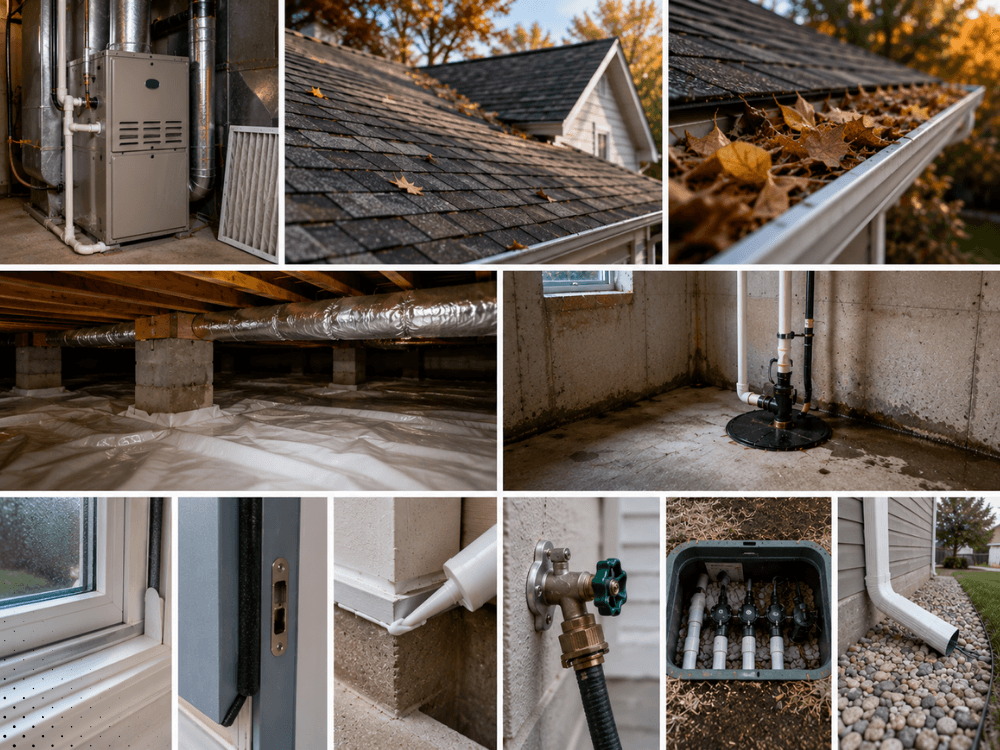
Schedule your furnace tune-up in September, before HVAC technicians fill their schedules with reactive calls in November and December. A certified technician will clean the burners, check the heat exchanger for cracks (the primary carbon monoxide risk in a forced-air system), verify the ignition sequence, and confirm the thermostat is calibrated. Replace your air filter now. If the unit is approaching 15–20 years old, have an honest conversation with your technician about service life.
Carbon monoxide detectors should be tested and batteries replaced every September. In a climate where homes are sealed tight for six months, this is not optional.
What Does Your Roof Look Like Before the First Snowfall?
Eastern Idaho roofs face a specific set of stresses: freeze-thaw cycles from late September through April, wind-driven snow from the southwest, and ice dam formation when interior heat escapes through inadequate attic insulation. A roof that is compromised going into winter will be more compromised by spring.
Walk the perimeter of your home now and look for missing, curled, or cracked shingles. Check flashing around chimneys, plumbing vents, and roof penetrations — flashing is the most common entry point for water intrusion in this climate. Look at gutters for sagging sections and debris accumulation. Clear them before the first freeze turns standing water into ice.
 Have You Checked Your Crawl Space or Basement for Moisture?
 Have You Checked Your Crawl Space or Basement for Moisture?
The high desert climate around Idaho Falls creates conditions that homeowners often misread. Summer is dry — but the irrigation season and late-summer afternoon storms introduce moisture that can collect in crawl spaces and basements before ground freeze locks it in for the season.
Check your crawl space access before the ground freezes. Look for standing water, condensation on floor joists, any deterioration in vapor barrier coverage, and signs of pest activity. A crawl space that enters winter with trapped moisture creates conditions for wood rot and mold over the long heating season. If you have a sump pump, test it now.
Are Your Doors, Windows, and Caulking Ready for High-Desert Winter?
The dry, cold air of eastern Idaho winters is hard on caulking and weatherstripping. Unlike humid climates where caulk stays pliable longer, the arid conditions on the Snake River Plain cause caulk to crack and shrink faster. Check the weatherstripping on exterior doors — if you can see light around the frame or feel a draft with the door closed, replace it before heating season.
Look at caulking around window frames, the junction of siding and foundation, and any exterior wall penetrations (pipe penetrations, electrical conduit, dryer vents). These gaps admit cold air and drive up heating costs through February.
What About the Perimeter and Drainage Before Ground Freeze?
Idaho Falls soils are freeze-thaw active. Clay pockets mixed into the volcanic soil composition expand and contract with moisture cycles. Look at the grade around your foundation perimeter — the ground should slope away from the house at a minimum of one inch per foot for the first six feet. Clear window wells. Check the sump pit if you have one.
Disconnect and drain garden hoses, shut off exterior hose bibs, and blow out any irrigation lines before freeze. A burst exterior pipe is a simple, preventable problem that catches homeowners every year in this climate.
Take the next step. Ready to schedule your inspection? Call (208) 268-8350 or book online https://208inspect.com/ today!

