
Published: November2026
Keep heat reaching every place a water line runs, keep cold air away from those lines, and know exactly where your main shutoff is before the first deep freeze arrives.
That is the short version. The longer version matters, because frozen pipes in Idaho Falls are rarely about the pipes you can see under the kitchen sink. They are about the lines running through a crawl space, an exterior wall, a garage or a cantilevered floor — the parts of the house nobody looks at until the water stops, or worse, until it starts running where it should not.
November is the month to deal with it. The ground on the Upper Snake River Plain is locking up, the serious cold is close, and a plumber will still answer a scheduled call. Once the first real cold snap hits Idaho Falls, Ammon, Rigby and Rexburg, every plumber in the valley is chasing burst lines.
Why Do Pipes Freeze in Idaho Falls Homes?
Because water lines run through spaces that are not heated, and eastern Idaho winters are cold enough to freeze water in any line that loses its protection.
Water expands as it freezes. In a closed pipe, the ice itself is usually not what splits the line — it is the pressure that builds between the ice blockage and a closed faucet downstream. That is why a pipe often bursts somewhere other than where it froze, and why a split may not show itself until the line thaws and the water starts flowing again.
Wind makes it worse. A line that would be fine in still air can freeze when wind drives cold air through a foundation vent, a gap around a rim joist, or a poorly sealed hose bib penetration. On the open Snake River Plain, wind is part of nearly every winter storm.
Where Are Pipes Most at Risk in Eastern Idaho Homes?
In the places that sit outside the heated envelope of the house, or right against its edge.
Crawl Spaces
Many homes around Idaho Falls sit over a crawl space, and supply lines often run right through it. Foundation vents left open in winter, insulation that has fallen off the pipes or out of the floor above, and gaps at the rim joist all let cold air reach water lines directly. A crawl space that stays reasonably warm in November can drop sharply once a real cold snap and wind arrive together.
Exterior Walls
A kitchen or bathroom sink on an outside wall is a classic freeze point, especially when the cabinet doors stay closed and the room’s heat never reaches the back of the cabinet.
Garages
Water heaters, laundry hookups and supply lines to a bonus room above the garage are all common in eastern Idaho homes. An attached garage is not heated living space, and a big door left open on a cold afternoon drops the temperature fast.
Hose Bibs and Exterior Faucets
Even a frost-free hose bib can split if a garden hose is left connected, because the hose traps water in the valve body. Older standard bibs without a separate interior shutoff are at higher risk.
Cantilevered Floors and Bump-Outs
Bay windows, overhangs and room additions sometimes carry plumbing through a floor that is exposed to outside air underneath. These are easy to miss because nothing about them looks unusual from inside.
Vacant or Lightly Used Spaces
A basement bathroom nobody uses, a guest suite with the vents closed, or a shop with a sink — low use means no warm water moving through the lines and nobody noticing a problem early.
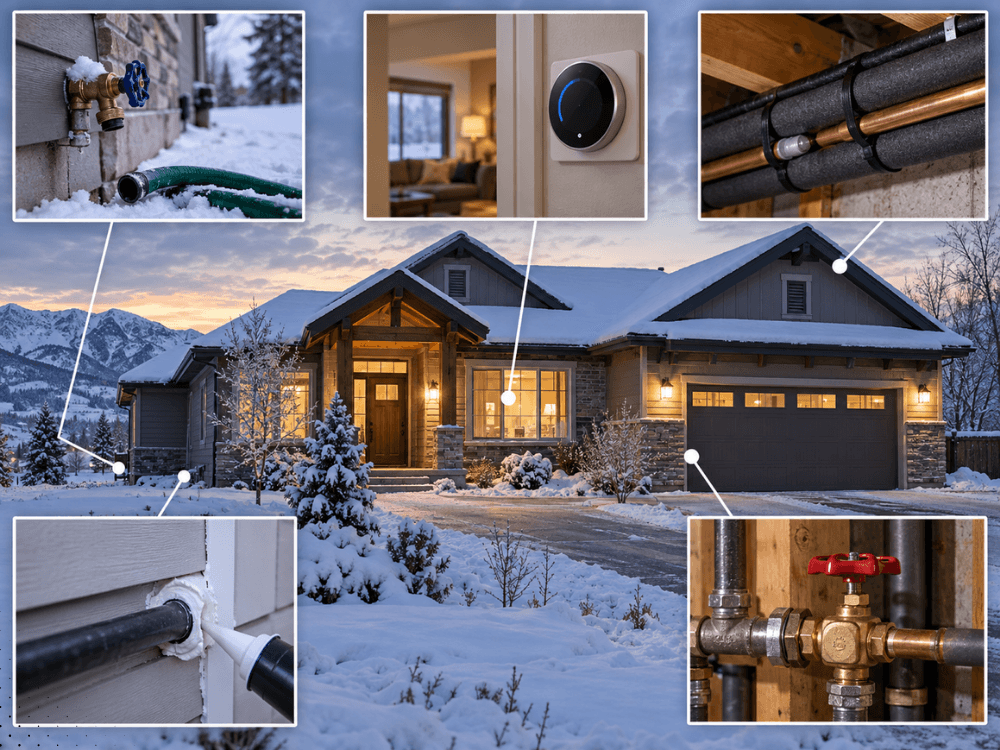
How Do You Keep Pipes From Freezing During a Cold Snap?
Keep the heat on and steady, let warm air reach the pipes, and keep cold air off them.
Close the foundation vents on a crawl space for the winter if your home’s setup calls for it, and check that the crawl space access door closes and seals.
Insulate exposed supply lines in the crawl space, garage and any unheated area with pipe insulation, and replace sections that have fallen off or been torn.
Seal the gaps where cold air gets in — around rim joists, where pipes and wires pass through the foundation, and around hose bib penetrations.
Open the cabinet doors under sinks on exterior walls on the coldest nights so room heat can reach the pipes.
Let a faucet drip on a line that is vulnerable during a hard cold snap. Moving water is much harder to freeze, and an open faucet relieves the pressure that actually bursts pipes.
Keep the thermostat steady day and night during severe cold rather than setting it way back overnight.
Keep the garage door closed as much as possible if there is plumbing in the garage.
Disconnect and drain every garden hose, and close the interior shutoff to any exterior faucet that has one.
If you use electric heat cable on a vulnerable line, use a product listed for that purpose and install it exactly as the manufacturer directs. Improvised heat sources in a crawl space create a different kind of problem.
What Should You Do Before Leaving for the Holidays?
Never turn the heat off, and decide ahead of time who will check the house while you are gone.
Thanksgiving and the December holidays are when a lot of eastern Idaho families travel, and a house left alone during a cold snap is where frozen-pipe damage gets expensive. A split line that runs for a day before anyone notices does far more damage than one caught in the first hour.
Leave the heat on at a steady setting. Do not shut the furnace off to save money while you are away.
Consider shutting off the main water valve and opening a faucet to relieve pressure if you will be gone for more than a short trip. Ask a plumber whether draining the lines makes sense for your house.
Ask a neighbor or friend to walk through the house during any serious cold, and show them where the main shutoff is.
Consider a water leak sensor or a temperature sensor that sends an alert to your phone. They are inexpensive, simple to place under sinks and near the water heater, and they turn a disaster into a phone call.
What Do You Do If a Pipe Freezes or Bursts?
If a line is frozen but not leaking, open the faucet it feeds and warm the pipe gently. If it has burst, shut off the main water valve first.
For a Frozen Line
Open the faucet so water can flow once the ice starts to melt.
Warm the pipe starting from the faucet end, working back toward the frozen section, using a hair dryer, a heating pad, or warm towels.
Never use an open flame — no torches, no propane heaters in the crawl space. That is how a frozen pipe turns into a house fire.
If you cannot find the frozen section, cannot reach it, or cannot thaw it, call a plumber.
For a Burst Line
Shut off the main water valve immediately.
If water is near electrical outlets, panels or appliances, stay clear and shut off power to that area at the panel only if you can do so safely from a dry spot.
Call a plumber, photograph the damage, and contact your insurance company.
All of that depends on one thing: knowing where your main shutoff is and knowing that it actually turns. Find it now. Turn it. A valve that has not moved in a long stretch often will not move on the night you need it.
What Does a Home Inspector Look For That Points to Freeze Risk?
The same weak spots described above, in the parts of the house most homeowners never go.
During a home inspection, an inspector looks at the visible, accessible plumbing and the spaces it runs through. In an eastern Idaho home, the things that point to freeze risk often include:
Supply lines running through a crawl space without insulation, or with insulation that has fallen away
Open foundation vents, a missing or damaged crawl space access cover, and gaps at the rim joist
Fallen or missing floor insulation above the crawl space
Evidence of past freeze repairs — mismatched pipe sections, repair couplings, water staining on subfloor or framing
Hose bibs without a separate interior shutoff, or a hose left connected
Plumbing in an attached garage or a cantilevered floor
A main water shutoff that is hard to find or hard to reach
An inspection is a visual assessment of accessible areas at a point in time. It does not open walls or floors. What it gives you is a written picture of where the house is vulnerable, while there is still time to insulate, seal and schedule a plumber before the cold arrives. InterNACHI’s Standards of Practice describe the scope inspectors work to.
For homeowners who want a broader evaluation of accessible home systems, the Elite Inspection Package provides information about Idaho Elite Inspection Team’s inspection services.
An infrared home inspection may also help identify temperature differences in accessible areas. Infrared imaging does not see through walls or independently confirm that a pipe is frozen, but it can provide additional information about certain temperature patterns.
Q&A: What Idaho Falls Homeowners Ask About Frozen Pipes
Do Frost-Free Hose Bibs Still Freeze?
They can. A frost-free bib keeps its valve inside the heated space, but a garden hose left connected traps water in the valve body, and that water can freeze and split the bib inside the wall. Disconnect and drain every hose before the cold arrives.
Should I Let My Faucets Drip in Idaho Falls?
On a line that is vulnerable — a sink on an exterior wall, or a fixture fed through the crawl space — a slow drip during a hard cold snap helps. Moving water is harder to freeze, and an open faucet relieves the pressure that actually bursts pipes.
Is It Safe to Turn the Heat Down When I Travel?
Keep the heat on at a steady setting. Turning it off, or turning it far down, is one of the most common reasons pipes freeze in an empty house. Have someone check on the house during serious cold.
Should I Close My Crawl Space Vents in Winter?
For many eastern Idaho homes with a vented crawl space, closing the vents for winter helps protect supply lines. Homes with a sealed or conditioned crawl space work differently, so follow the setup your house was built with or ask a qualified contractor.
How Can I Tell If a Pipe Is Frozen?
A faucet that produces little or no water during cold weather, frost visible on an exposed pipe, or an unusual odor from a drain can all point to a frozen line. Open the faucet, warm the line gently from the faucet end, and never use an open flame.
What Areas Does Idaho Elite Inspection Team Serve?
Idaho Elite serves Idaho Falls and eastern Idaho — including Ammon, Shelley, Rigby, Rexburg, Blackfoot and Pocatello. Call to confirm availability for your property address.
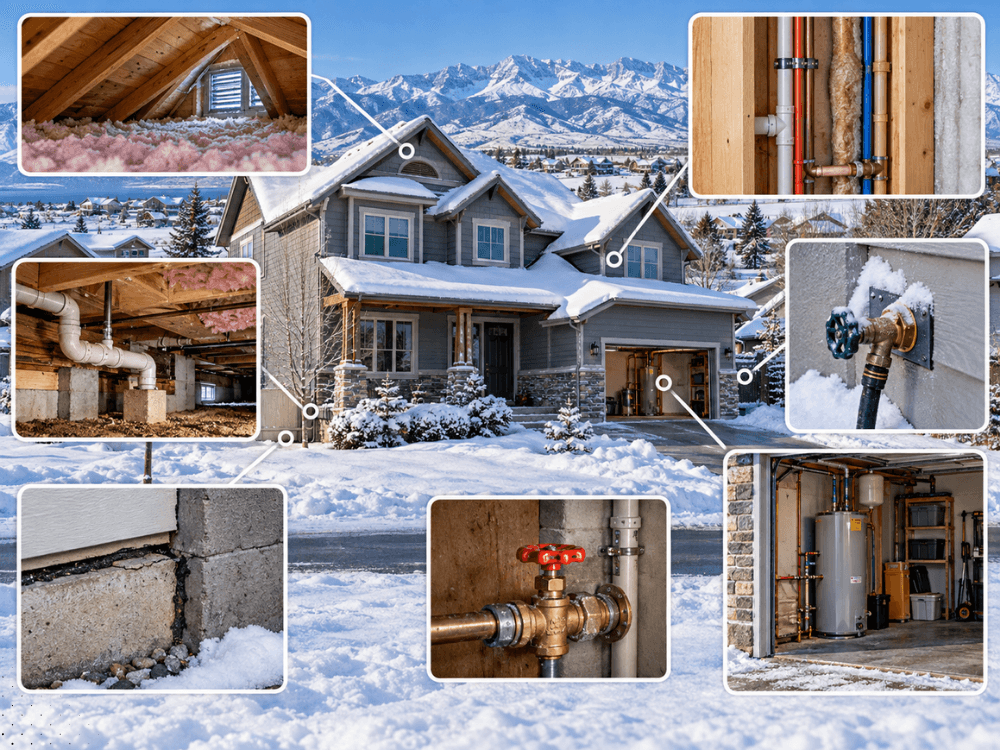
Prepare Your Idaho Falls Home Before the First Deep Freeze
The first cold snap always shows up sooner than it feels like it should. Take time now to check exposed plumbing, protect vulnerable water lines, and locate your main shutoff before freezing temperatures arrive.
Idaho Elite Inspection Team serves homeowners across Idaho Falls and Eastern Idaho. A professional home inspection can help document visible plumbing conditions and accessible areas where cold exposure may be a concern.
Call Brandon at (208) 268-3499 to discuss your inspection needs.
Schedule your home inspection online: https://208inspect.com/schedule/
Buying or selling this winter? Explore Idaho Elite Inspection Team’s inspection services and schedule an appointment before the cold weather limits access to exterior components.

