
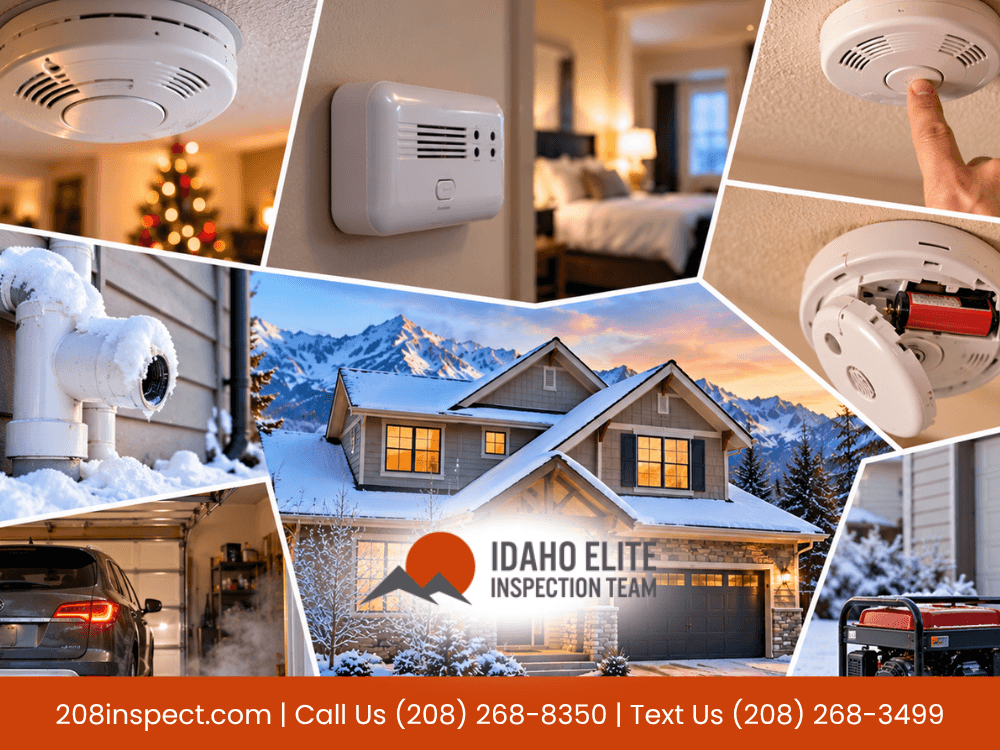
 November in Idaho Falls is when the house closes up for the season. The windows stay shut, the furnace runs around the clock, the wood stove gets lit most evenings, and in a few weeks the house fills up with family for Thanksgiving.
That is exactly the setup where carbon monoxide becomes a real concern. Every fuel-burning appliance in the house is working its hardest, the house is sealed tight, and there are more people — including kids and older relatives — sleeping under your roof than at any other point in the year.
The good news is that carbon monoxide safety in Idaho Falls homes comes down to a short list you can handle in an afternoon. Here is what to check before the guests arrive.
Why Does Carbon Monoxide Become A Bigger Concern In Idaho Falls Homes In Winter?
Because winter is when combustion appliances run the most and fresh air comes in the least.
Carbon monoxide is produced whenever fuel burns — natural gas, propane, wood, oil or gasoline. A furnace, water heater, gas range, fireplace or wood stove that is working correctly vents those combustion gases outside. When something goes wrong with the venting, or the appliance is not burning cleanly, the gas can end up inside instead.
You cannot see it, smell it or taste it. Early symptoms of exposure — headache, dizziness, nausea, fatigue — are easy to mistake for the flu, which is also in season. That is why an alarm is the only reliable warning most households will get.
Where Should Carbon Monoxide Alarms Go In Your Home?
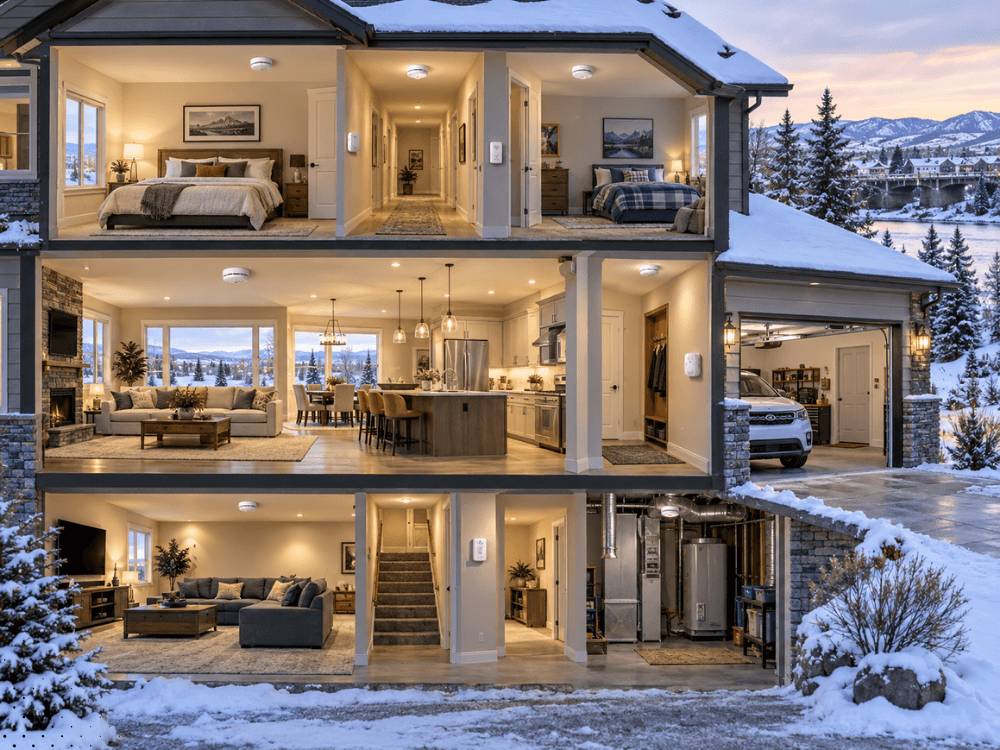
At minimum, one on every level of the home and one outside each separate sleeping area.
Beyond that, follow the placement instructions printed on your specific alarm, because manufacturers differ on mounting height and on how far the unit should sit from fuel-burning appliances. A few practical points apply almost everywhere:
- Check the date on the back. CO alarms do not last forever. The manufacturer prints a replace-by date or a manufacture date on the unit. If you cannot remember when you bought it, look now.
- Press the test button. It confirms the horn and battery work. Do it with everyone home so they know what the CO alarm sounds like — it is often a different pattern from the smoke alarm.
- Do not forget the basement bedroom. Plenty of homes around Idaho Falls, Ammon and Rigby have a finished basement with a guest room near the furnace and water heater. That room needs coverage.
- Replace batteries on a schedule, not when the chirp starts at 3 a.m.
If you have guests staying in a camper or trailer in the driveway over the holidays, make sure that space has its own working CO alarm, too.
Can Snow Block A Furnace Vent In Eastern Idaho?
Yes — and it is one of the most common winter venting problems on the Upper Snake River Plain.
Many newer and replacement furnaces are high-efficiency units that vent through two white plastic pipes out the side of the house, often only a foot or two above the ground. One brings in combustion air; the other carries exhaust out. When drifting snow buries them, the furnace may shut itself off on a safety switch, or exhaust can linger right where air is being drawn back in.
After every real snowfall or wind event:
- Walk around the house and find both pipes. Clear the snow away from them by hand, and keep the area around them clear as snow piles up through the season.
- Do not pile shoveled or plowed snow against that side of the house.
- Check the water heater vent and dryer vent, too. Both can be buried or frosted over.
- Look up at the roof vents for the furnace and water heater if yours vent that way. Ice buildup at the cap is worth a call to a heating contractor.
If you are not sure which pipes on the outside of your house belong to the furnace, that is worth sorting out now, while the ground is bare enough to see them.
 Is It Safe To Warm Up The Car In An Attached Garage?
 Is It Safe To Warm Up The Car In An Attached Garage?
No — not with the door closed, and not with it open either.
It is tempting on a cold eastern Idaho morning. But exhaust in an attached garage does not stay in the garage. It moves into the house through the door to the living space, through gaps around that door, and through any duct or wall penetration shared with the home.
A few garage checks worth making this month:
- Back the car out first, then let it warm up in the driveway.
- Check the door between the garage and the house. It should close fully and seal. Worn weatherstripping and a gap at the threshold are common, and both are easy fixes.
- Never run a generator, gas-powered snowblower or propane heater in the garage or anywhere inside the house, even briefly, even with the big door up.
- Keep the grill outside. Charcoal and propane grills are outdoor appliances, holiday turkey or not.
What About Smoke Alarms, Holiday Cooking And Decorations?
The same afternoon you test the CO alarms, test every smoke alarm, too.
Holiday cooking is the part of the season where kitchen fires start — a pan left on a burner while the door is open and everyone is saying hello. Keep someone assigned to the stove when it is in use, and keep towels, packaging and decorations away from the cooktop.
A few more for the season:
- Keep the tree watered every day if it is a live one, and away from heat registers, the wood stove and the fireplace.
- Check extension cords and light strings for cracked insulation or damaged plugs, and do not run cords under rugs.
- Blow out candles when you leave the room.
- Know where your fire extinguisher is — and check that the gauge is in the green.
What Should You Do If A Carbon Monoxide Alarm Goes Off?
Get everyone outside to fresh air right away, then call 911 from outside the house.
Do not stay to find the source, and do not open windows and wait it out. Count heads once everyone is out. Do not go back in until emergency responders tell you it is safe. After that, have a qualified heating contractor inspect the appliances before they run again.
If anyone has symptoms — headache, dizziness, confusion, nausea — tell the dispatcher. That is a medical call as well as an alarm call.

