
 Plenty of people buy homes in eastern Idaho between Thanksgiving and the spring thaw. Job transfers, school terms at Idaho State in Pocatello and BYU-Idaho in Rexburg, a lease that ends in January, a baby due in March — life does not wait for the snow to melt.
And the first question most winter buyers ask is a fair one: can a house even be inspected properly when there is snow on the ground?
The honest answer is that a winter home inspection in Idaho Falls sees some things better than a summer inspection can, and some things not at all. Knowing which is which — before you write the offer — is what keeps a winter purchase from turning into a spring surprise.
Is It A Good Idea To Buy A Home In Idaho Falls In Winter?
It can be, as long as you go in knowing what the season hides and what it reveals.
Winter buyers in Idaho Falls, Ammon, Rigby and Rexburg often face fewer competing buyers than they would in spring, and sellers who list in the cold months usually have a reason to move. That can mean more room to negotiate on price, repairs and timing.
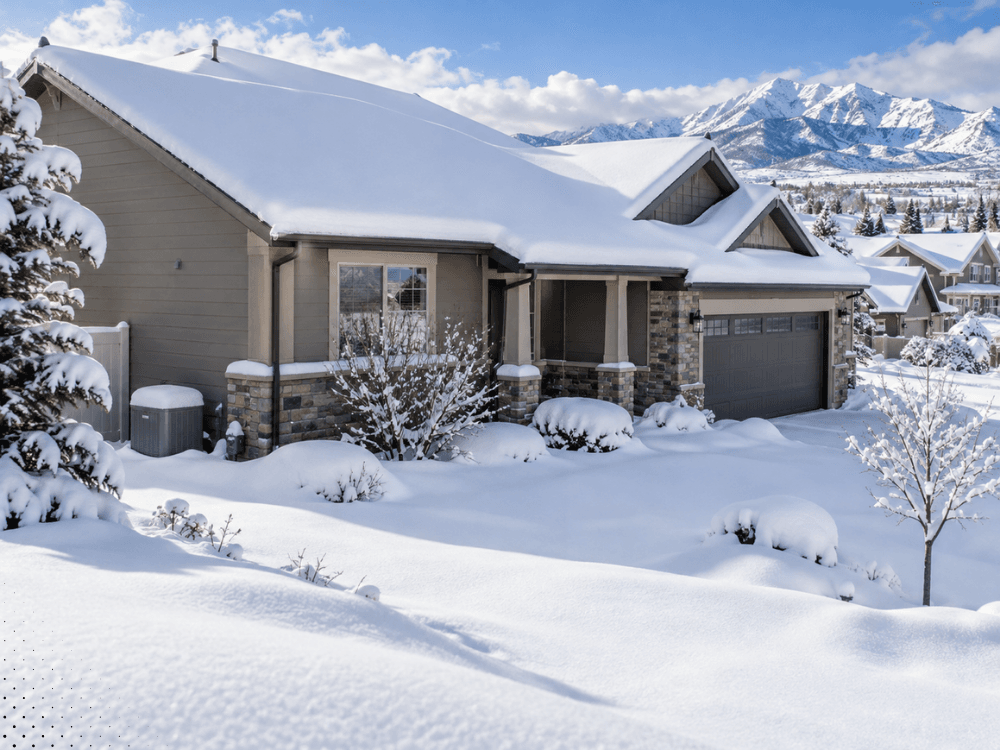
The trade-off is visibility. Snow covers the roof, the yard and the grading, and some outdoor systems are shut down for the season. A good winter inspection is built around that reality instead of pretending it is not there.
What Can A Winter Home Inspection See That A Summer Inspection Can’t?
It sees the house doing its hardest job: keeping people warm.
In July, a furnace is a box in the basement. In December, it is running under real load, and an inspector can observe how the system operates, whether warm air is actually reaching the far bedrooms, and whether the venting is behaving the way it should. A winter visit also shows things that only exist when it is cold outside:
- Frost in the attic. Frost on the underside of the roof sheathing or on nail tips means warm, moist air is leaking up from the living space. In summer, there is nothing to see.
- Active ice dams and icicles at the eaves, which point straight back to heat loss and insulation problems in the attic.
- Condensation and frost on windows, which can signal failed seals, high indoor humidity or both.
- Cold rooms and drafts around doors, windows and outlets on exterior walls.
- How the crawl space holds up when it is actually cold — open foundation vents, missing insulation and exposed supply lines are easier to judge in context.
For an eastern Idaho house, that information is worth a lot. You are buying the home you will live in through January, and a winter inspection shows you that version of it.
What Can’t Be Inspected Under Snow And Ice?
Anything the snow is covering, and any system that is shut down for the season.
Expect the report to note limitations like these:
- The roof covering. If the roof is under snow, the shingles, flashing and vent boots cannot be evaluated. An inspector may be able to look at the roof edges, the attic side of the deck and any exposed areas, but snow-covered surfaces are off the table.
- Grading and drainage. Whether the ground slopes away from the foundation is hard to judge under a snowpack.
- Sprinkler and irrigation systems. These are drained and shut down for winter across the valley and are not run during a winter inspection.
- Air conditioning. Many manufacturers caution against running a central air conditioner in cold outdoor temperatures, so it often cannot be operated in winter.
- Decks, patios, walkways and exterior surfaces buried under snow or ice.
None of that is a reason to walk away from a house. It is a reason to plan for it in your contract.
 How Should Winter Buyers Handle Items Marked “Not Inspected”?
 How Should Winter Buyers Handle Items Marked “Not Inspected”?
Treat them as open questions, and talk with your real estate agent about how to cover them before closing.
An item marked “not inspected due to snow cover” is not a pass. It is an unknown. Depending on the contract and the seller, buyers and their agents sometimes look at options such as asking the seller for roof records or recent repair receipts, scheduling a follow-up look once conditions allow, or negotiating how an uninspected item will be handled. What is available depends on your purchase agreement, so this is a conversation to have with your agent early — not after the inspection is done.
What you can control is the inspection itself. Give the inspector safe access to the attic and crawl space, and make sure the driveway and walkways are clear on inspection day.
What If The House Is Vacant And Winterized?
Then ask for it to be de-winterized before the inspection.
Bank-owned homes, estate sales and vacant listings in eastern Idaho are often winterized: the water is shut off, the lines are drained, and antifreeze may be in the traps. A winterized house cannot have its plumbing tested — no running water, no checking drains, no looking for leaks under pressure, no seeing whether the water heater fires.
That matters more than usual, because a vacant house that sat through a cold snap is exactly where freeze damage hides. A split supply line inside a wall or under a crawl space does not show itself until the water comes back on. Ask your agent to request that the seller restore utilities and de-winterize the plumbing before your inspection, so the systems can actually be run.
Take the next step. Ready to schedule your inspection? Call (208) 268-8350 or book online https://208inspect.com/ today!

